

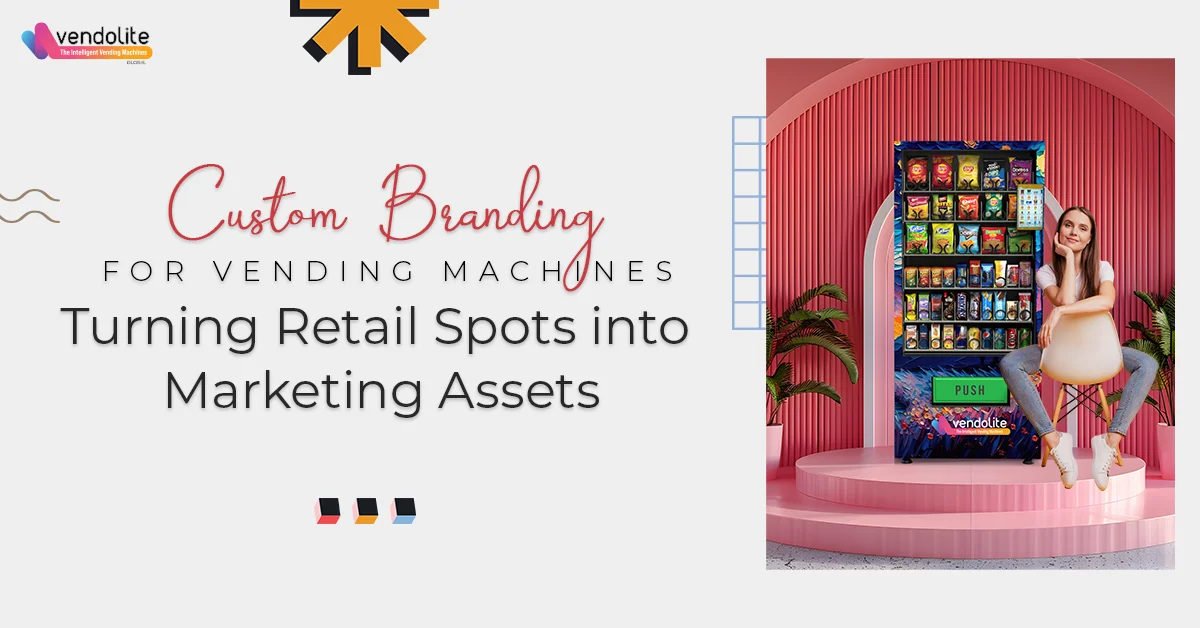
For years, vending machines were considered utility items—the kind of product you place in a corner and forget about until you need it. But in 2025, that perception is rapidly changing.
Today, vending machines have moved far beyond being simple points of sale. When branded creatively, they become powerful marketing tools—tangible brand interfaces operating 24/7 in high-traffic environments. Custom branding has transformed vending from passive retail into active brand storytelling.
This shift is redefining how businesses think about visibility, recall, and consumer engagement.
In traditional retail, branding lives through storefronts, interiors, packaging, and customer service. In automated retail, there is no human interaction—making branding even more critical.
A branded vending machine does more than dispense products. It communicates:
In offices, hospitals, colleges, airports, and public spaces, a well-designed vending machine becomes a permanent brand billboard—without recurring advertising rental costs.
Modern vending machines offer significantly more surface area and interaction possibilities than earlier models. This allows brands to move beyond logo placement into immersive micro-branding.
Custom branding can include:
A well-executed vending machine doesn’t blend into the environment—it anchors it.
One of the strongest advantages of vending machines is placement. Offices, colleges, gyms, hospitals, and transit hubs are spaces people return to daily.
This repetition creates a powerful branding effect.
Unlike social media ads that disappear in seconds, a branded vending machine delivers:
Over time, the machine becomes a recognizable and trusted presence—building credibility simply by being reliable.
From a marketing standpoint, this is low-noise, high-frequency brand reinforcement.
The most effective vending machine branding doesn’t demand attention—it aligns with behavior.
Here, branding succeeds because it matches contextual intent.
The machine doesn’t interrupt—it complements.
This alignment turns branding from visual clutter into genuine value.
Today’s vending machines are no longer static. Touchscreens and digital displays create new opportunities for interactive brand engagement.
Brands can:
These interfaces allow brands to update messaging dynamically—without altering physical assets.
As a result, the vending machine becomes a living marketing channel, not a fixed installation.
One of the most overlooked benefits of branded vending is measurability.
Unlike traditional outdoor advertising, vending machines can link branding exposure directly to performance data such as:
This creates a feedback loop where branding decisions are driven by real consumer interaction, not assumptions.
In effect, vending machines become one of the few physical retail assets that behave like digital channels.
Custom branding delivers maximum impact when treated as a strategic investment, not a design exercise.
When aligned with business goals, branded vending machines can support:
At this stage, vending machines stop being background infrastructure and start acting as brand ambassadors.
As retail fragments into micro-moments and decentralized touchpoints, brands must rethink presence.
Custom-branded vending machines sit at the intersection of:
They deliver value without demanding attention—and tell brand stories without a salesperson.
Custom branding turns vending machines from silent sellers into always-on marketing assets.
They never close.
They don’t compete for attention.
They don’t rely on human interaction.
They simply exist—consistently reinforcing brand identity where it matters most.
In a world where attention is expensive and trust takes time to earn, branded vending machines deliver not just attention, but attention with intent.
That’s how a retail location becomes a true marketing asset.