
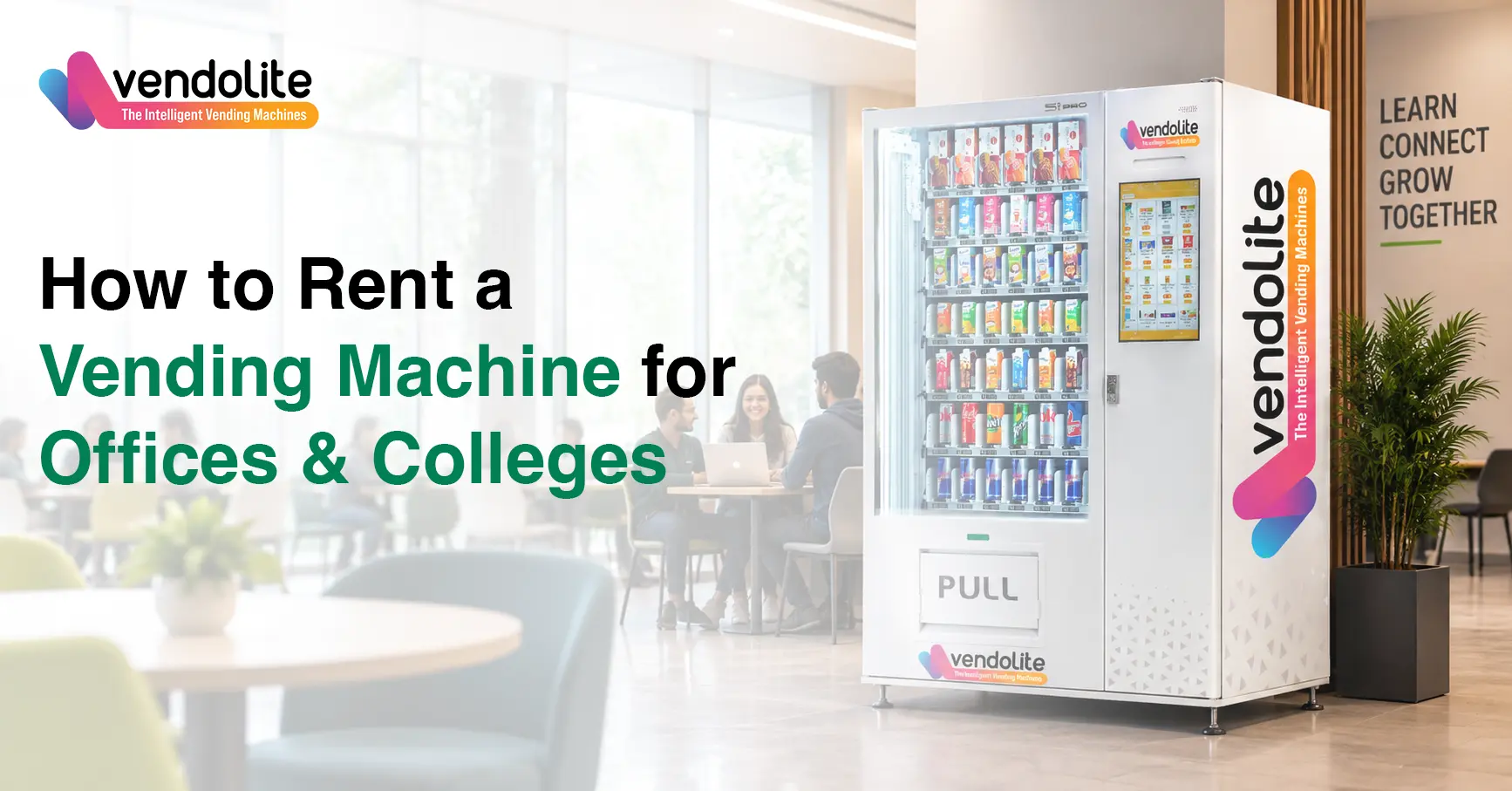
Providing fast, round-the-clock access to fresh snacks, meals, and beverages can transform an office breakroom, university hall, or school campus. However, buying vending equipment outright requires significant upfront capital and ongoing maintenance responsibilities. The rental vending machine offers a flexible, low-risk solution that brings automated refreshment straight to your facility without the financial strain.
If you’re wondering how to rent a vending machine, this guide walks you through the process step by step. From choosing the right machine to understanding the rental agreement and ongoing servicing, here’s what workplaces and educational institutions should know before renting.
What Is Vending Machine Rental?
Vending machine rental is a service model where a vending machine provider supplies a machine to an organization for an agreed rental period.
Instead of purchasing the equipment outright, the organization pays a recurring rental fee based on the terms agreed with the vending provider. Depending on the service model, the provider may also handle installation, servicing, maintenance, restocking, and other operational requirements.
This makes vending machine rental particularly useful for organizations that want to offer automated food and beverage access without taking complete responsibility for owning and managing the equipment.
Why Rent a Vending Machine Instead of Buying One?
When planning a vending facility, organizations generally have two options: purchase the machine or rent it.
Buying can provide ownership of the equipment, but it also means the organization may need to consider the initial investment, maintenance, repairs, payment technology, and other operational requirements.
Vending machine on rent can provide access to vending equipment through a recurring payment model.
Who Can Benefit From Vending Machine Rental?
Vending machines can be useful in many environments, but they are especially relevant in workplaces and educational institutions where large groups need convenient access to refreshments.
Vending Machines for Corporate & IT Offices
Corporate and IT offices often operate for extended hours, with some organizations running multiple shifts or 24/7 operations.
Employees may need snacks, beverages, or quick food options outside traditional cafeteria hours.
A vending machine can be placed in areas such as:
- Employee cafeterias
- Break rooms
- Common areas
- Reception areas
- Pantry zones
- High-traffic office floors
Depending on the workplace, the product mix can include snacks, beverages, coffee, ready-to-eat food, and other frequently purchased items.
For organizations with night-shift employees, vending machines can also provide an additional food-access option when regular cafeteria services are unavailable.
Vending Machines for Colleges & Educational Institutions
Educational campuses have a different user profile, with students, faculty, and staff using vending machines throughout the day.
Machines can be positioned in:
- Student common areas
- College cafeterias
- Hostels
- Libraries
- Academic blocks
- Recreation areas
- High-footfall campus zones
The product mix can be designed around affordability, convenience, and the preferences of the student population.
How to Rent a Vending Machine – Step-by-Step Guide
Step 1: Assess Your Space and Needs
Before reaching out to a provider, it helps to have a clear picture of:
- Footfall — How many people will realistically use the machine, and when?
- Available space — Most machines need only a small footprint (often around 4×4 ft), so even compact break rooms or corridors can work.
- Power access — Confirm the location has a stable power source nearby.
- Peak demand periods — Night shifts, exam weeks, or visiting hours (for hospitals) all create different demand patterns worth planning around.
Step 2: Choose the Right Type of Machine
Vending machines aren’t one-size-fits-all. Common types include:
- Snack and beverage machines — Packaged snacks, chips, cold drinks, water
- Coffee and tea machines — Quick energy boosts during shifts or study sessions
- Combo machines — A mix of snacks, beverages, and light meals in one unit
The right choice depends on your audience: night-shift IT employees may need more meal options, while a college hostel might lean toward snacks and beverages.
Step 3: Understand Installation, Servicing, and Restocking
This is where a rental partner’s value becomes clear. A good vending rental agreement should cover:
- Installation — The provider handles machine placement, setup, and configuration, so it’s ready to use almost immediately.
- Servicing — Regular maintenance visits keep the machine clean, functional, and free of technical issues, without pulling your internal team into troubleshooting.
- Restocking — Products are restocked on a set schedule based on actual usage patterns.
Step 4: Review the Rental Agreement Carefully
Once you’ve shortlisted a provider, the next step is understanding the rental agreement for vending machine placement. Key terms to look out for include:
- Security deposit — Most providers require a refundable deposit before installation, which protects against damage or early contract termination. Clarify the amount and refund conditions upfront.
- Minimum tenure — Rental contracts typically specify a minimum commitment period (often 6–12 months). Make sure this aligns with your actual usage plans before signing.
- Lock-in period — Some agreements include a lock-in period during which the contract can’t be cancelled without penalties. Understand this clearly, especially if your organization’s needs might change (e.g., office relocation, seasonal campus demand).
- Payment terms — Confirm whether the rental fee is fixed monthly or tied to usage/sales volume.
Step 5: Set Up Cashless Payment Options
Most modern vending machines support UPI, cards, mobile wallets, and in some cases meal-benefit passes. For workplaces and campuses with tech-savvy users, this is now considered a standard expectation rather than an add-on — so confirm this capability before finalizing a provider.
Industry-Specific Considerations
For IT Offices and Corporates: Prioritize 24/7 availability, since night-shift food access is usually the biggest gap a staffed cafeteria can’t fill cost-effectively.
For Colleges and Universities: Consider hostel placement and exam-season demand spikes, along with student-friendly pricing.
For Hospitals: Round-the-clock reliability and hygiene standards matter most, given continuous use by staff, attendants, and visitors.
Why Businesses Choose Vendolite Vending Machines?
More Than Just Snacks
Snacks, beverages, healthy options, regional favourites & essentials.
Every Payment Made Easy
UPI, cards, digital wallets & corporate meal cards for seamless cashless payments.
Smart IoT Monitoring
Real-time monitoring of machine performance, temperature, inventory & issues.
24×7 Support & Service
Regular restocking, maintenance & round-the-clock support for hassle-free vending.
Final Thoughts
Knowing how to rent a vending machine is about more than finding a machine and agreeing to a monthly rental. The right solution should match your location, users, product requirements, and operating environment.
For corporate and IT offices, vending machines can provide convenient access to food and beverages throughout extended working hours. For colleges and educational institutions, they can offer students and staff convenient refreshment options across the campus.
Before renting, evaluate the machine, product mix, location, payment options, installation, servicing, restocking, and rental agreement carefully.
Most importantly, look beyond the rental price and understand the complete service package.
If you’re planning to introduce vending facilities at your office, college, or institution, we can help you explore a rental solution based on your specific requirements.
Talk to our vending experts today!
Frequently Asked Questions
1. How to rent a vending machine?
To rent a vending machine, first identify your location, users, expected footfall, and product requirements. Then choose the appropriate machine and compare rental providers based on rental terms, installation, servicing, restocking, payment options, and technical support. Finally, review the rental agreement before installation.
2. Where can I rent a vending machine?
You can rent a vending machine from specialized vending machine rental providers that operate in your location. When comparing providers, consider not only the rental price but also installation, maintenance, servicing, restocking, payment options, and support.
3. Can I rent a vending machine for an office?
Yes. Vending machines can be used in corporate and IT offices to provide employees with convenient access to snacks, beverages, and other products, particularly in workplaces with extended operating hours.
4. Can colleges rent vending machines?
Yes. Colleges and educational institutions can use vending machines in student common areas, hostels, libraries, cafeterias, and other suitable campus locations.
5. What is included in a vending machine rental?
The inclusions depend on the provider and rental agreement. Depending on the plan, services may include machine installation, servicing, maintenance, payment setup, inventory management, and restocking.
6. What should I check in a vending machine rental agreement?
Check the rental fee, rental duration, security deposit, minimum tenure, lock-in period, installation terms, maintenance responsibilities, restocking arrangements, payment systems, additional charges, and termination conditions.
7. Who handles vending machine servicing and restocking?
This depends on the rental model. We offer managed services that include servicing and restocking, while other agreements may require the customer to manage some of these activities. Always confirm the responsibilities before signing.