

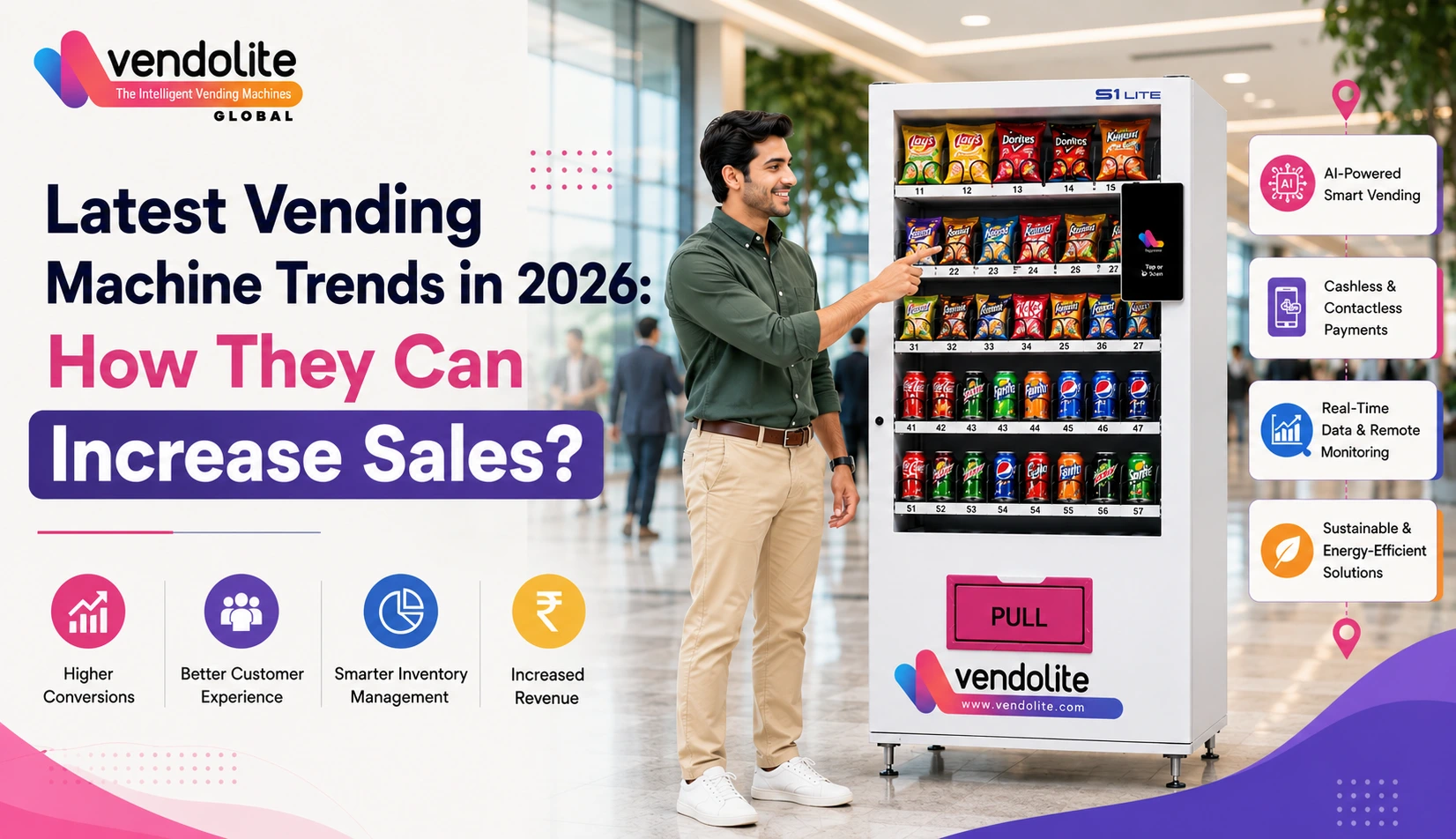
The vending machine industry is experiencing one of its most transformative periods in history. What was once considered a simple convenience solution for snacks and beverages has evolved into a sophisticated retail technology platform capable of delivering personalized customer experiences, generating valuable business insights, and driving significant revenue growth.
In India, the rise of digital payments, smart technologies, changing consumer preferences, and increasing demand for unattended retail has accelerated the adoption of modern vending machines across corporate offices, shopping malls, airports, hospitals, educational institutions, and public spaces. Businesses are increasingly recognizing vending machines as more than just automated dispensers—they are becoming smart retail touchpoints that operate around the clock while requiring minimal human intervention.
As we move through 2026, several key trends are reshaping the vending machine landscape and creating new opportunities for businesses looking to improve customer engagement and maximize sales. Understanding these trends can help operators, retailers, and entrepreneurs stay ahead of the competition and capitalize on India’s growing automated retail market.
The Indian vending machine market is one of the fastest-growing segments of automated retail in Asia. The Indian vending machines market was valued at roughly USD 728–970 million in 2025, with projections ranging from USD 1,041 million by 2034. (IMARC Group) to USD 1,623 million by 2030 (Next Move Strategy Consulting), depending on the methodology.
India installed an estimated 289,000 vending units in 2024, growing to around 358,000 in 2025, and is forecast to reach 736,000 units by 2030 — a unit growth rate of about 15.5% a year, according to Next Move Strategy Consulting. In other words, machines are increasing faster than market revenue, because units are getting smarter and more affordable at the same time.
The cashless “scan and pay is now the single biggest driver of vending sales in India. Cash is no longer king for vending. The integration of UPI QR codes — through apps like Google Pay, PhonePe, and Paytm- has removed the biggest point of friction in an impulse purchase.
The impact on revenue is substantial. Customers are more likely to make spontaneous purchases when payment is frictionless. Whether someone wants a quick snack, beverage, toy, or personal care item, UPI-enabled transactions encourage impulse buying by removing the hassle of carrying exact change.
For operators, digital payments also simplify financial management by reducing cash handling, minimizing theft risks, and providing transparent transaction records. As India’s digital economy continues to grow, UPI integration will remain a fundamental requirement for successful vending machine operations.
As vending machines expand into high-sensitivity categories such as pharmaceuticals and healthcare products, security and user verification are becoming critical. One of the emerging innovations in 2026 is face authentication-based access control, especially in pharmacy vending machines.
Modern smart vending systems are now integrating AI-powered facial recognition technology to ensure that only verified users can access regulated or age-sensitive products. In pharmacy vending applications, this helps ensure compliance, safety, and responsible distribution of medicines and healthcare essentials
The cloud-connected machines mean zero downtime and zero missed sales. Modern vending machines are now connected to the cloud through IoT (Internet of Things). That connection enables real-time inventory tracking— a constant check on whether the machine is powered on and cooling correctly.
This level of connectivity enables businesses to identify potential issues before they impact customers. If a machine is running low on stock or experiencing technical difficulties, operators receive instant alerts, allowing them to take corrective action quickly.
The result is improved operational efficiency, reduced downtime, and increased sales opportunities. Machines remain stocked, functional, and ready to serve customers at all times, ensuring that businesses do not lose revenue due to avoidable operational issues.
Artificial intelligence is becoming an increasingly valuable tool within the vending machine industry. By analyzing customer purchasing patterns, historical sales data, and seasonal demand fluctuations, AI-powered smart vending machines can help operators make smarter inventory decisions.
Instead of relying on guesswork, businesses can use predictive analytics to determine which products are most likely to sell at specific locations and times. For example, a vending machine located in a technology park may experience higher demand for energy drinks and protein bars during weekdays, while a machine in a shopping mall may see increased demand for family-oriented snacks on weekends.
This data-driven approach helps businesses reduce waste, improve product availability, and increase profitability. AI systems can also identify underperforming products and recommend alternatives that better align with customer preferences.
Consumer preferences are changing rapidly, particularly among younger generations and urban professionals. Increasing awareness of health and wellness has led many consumers to seek healthier alternatives to traditional vending machine snacks.
As a result, businesses are introducing a wider range of nutritious products into their vending machine offerings. Popular options include makhana, protein bars, granola, millet-based snacks, coconut water, yogurt drinks, trail mixes, and ready-to-eat breakfast items such as poha and upma.
This healthy vending trend is especially prominent in corporate offices, fitness centers, educational institutions, and healthcare facilities. Consumers are willing to pay premium prices for healthier products, allowing operators to achieve higher profit margins while meeting evolving customer demands.
Healthy vending also contributes to a positive brand image. Organizations that provide nutritious options demonstrate a commitment to employee wellness and customer health, strengthening their reputation and fostering customer loyalty.
In short, the vending machine is no longer just a point of sale—it is evolving into a powerful FMCG marketing channel.
Modern vending machines are increasingly being used as high-tech brand engagement platforms where consumer companies can directly interact with customers at the point of purchase. Brands often collaborate with vending operators to offer discounted trial pricing or free sampling of new products such as energy drinks, snacks, or functional beverages. This enables real-time product exposure in front of a highly targeted and captive audience.
Leading FMCG companies, including major players like Coca-Cola, ITC, and Nestlé, are actively exploring and expanding partnerships with vending operators to drive direct-to-consumer engagement and strengthen product discovery, as highlighted by Next Move Strategy Consulting.
From a business perspective, this shift creates significant new revenue opportunities beyond traditional product sales. Operators can monetize their machines through advertising placements on digital screens as well as branded machine wraps, effectively turning each unit into a mobile advertising asset. In addition, the data generated by vending machines—such as what products sell, at what time, and in which location—provides valuable insights for brands testing new product launches without the need for traditional retail shelf space.
In short, hybrid work models are gradually replacing traditional cafeterias with clusters of smart vending machines known as micro-markets.
As hybrid and round-the-clock work cultures become the norm in many organizations, companies are moving away from full-scale cafeterias and adopting micro-markets—self-service retail spaces made up of interconnected smart vending machines that collectively offer a complete meal solution, ranging from breakfast items to late-night snacks.
From a revenue perspective, this shift significantly extends earning potential. Unlike traditional cafeterias that typically close by evening, micro-markets operate 24/7, capturing sales from night-shift employees, late-working staff, and early-morning shifts. This continuous availability maximizes revenue generation from a single high-footfall location.
For operators, micro-markets unlock the full commercial value of premium office spaces by ensuring uninterrupted sales throughout the day. For employers, they deliver enhanced convenience and variety for employees without the high operational costs, staffing requirements, and infrastructure demands of a traditional canteen.
|
Trend
|
What It Changes
|
Revenue Effect
|
|---|---|---|
|
UPI-first payment revolution
|
Removes cash dependency; enables instant QR-based transactions
|
Higher impulse purchases, reduced checkout friction, increased conversion rate
|
|
Face Authentication for Secure Vending Machines
|
Enables touchless, identity-based access and payment
|
Premium user experiences, loyalty-linked pricing, reduced theft/loss
|
|
IoT-enabled remote management
|
Real-time monitoring of stock, temperature, and machine health
|
Zero downtime, reduced maintenance cost, maximized machine uptime sales
|
|
Artificial Intelligence optimizing inventory management
|
Predictive stocking based on demand patterns and consumption behavior
|
Lower stock wastage, improved product availability, higher turnover efficiency
|
|
Rise of Healthy Vending
|
Shift toward premium, health-focused snacks and beverages
|
Higher margins, premium positioning, increased repeat purchases
|
|
Smart sampling and brand partnerships
|
Machines become media + sampling platforms for brands
|
New revenue from advertising, sponsorships, and product sampling campaigns
|
|
Micro-markets in corporate India
|
Vending evolves into unattended mini-retail hubs in workplaces
|
24/7 revenue generation from single location, basket-size expansion
|
To fully capitalize on these emerging trends, vending machines must be designed with modern retail requirements in mind. In 2026, selecting the right vending supplier is not just about hardware—it is about choosing a smart, connected, and scalable retail platform.
When evaluating a vending machine solution, businesses should look for the following capabilities:
At Vendolite, we design smart vending machines built specifically around these evolving industry needs. Our solutions are IoT-enabled, fully cashless-ready, and highly customizable to suit diverse product categories such as snacks, beverages, healthy food options, PPE kits, and essential medical supplies.
The latest vending machine trends are redefining how businesses engage with customers and generate revenue. From UPI-powered payments and IoT-enabled monitoring to AI-driven inventory management and healthy product offerings, modern vending machines are becoming intelligent retail solutions that deliver convenience, efficiency, and profitability.
For businesses seeking to increase sales and improve customer engagement, investing in smart vending technologies is no longer just an option—it is becoming a competitive necessity.
Partner with Vendolite today and transform the way you sell, engage, and grow.
👉🏼 Contact our team to discover the right vending solution for your business.
Talk to our experts!